August 2026
Commissioning an Original Painting: What Collectors Should Know
What people usually don't say when they enquire
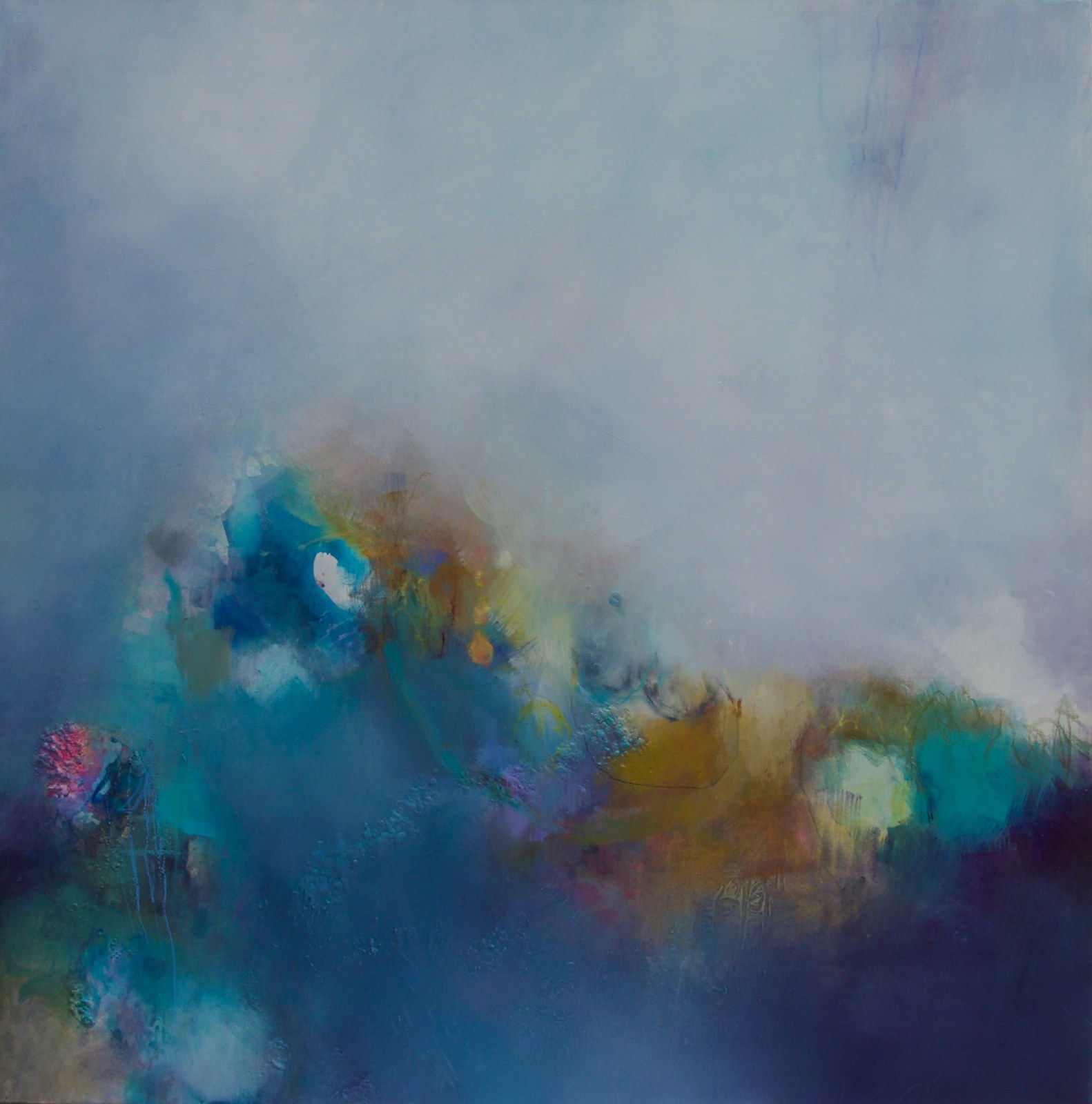
What people usually don't say when they enquire
Most people who think about commissioning a painting sit on the idea for a while before they say anything. They're not sure what to ask, or whether "commission" is even the right word for what they want. Some worry it sounds indulgent, as though a bespoke painting belongs to a different kind of life than theirs. Others simply don't know where a conversation like that begins.
If that's you, you're not doing it wrong. There's no correct way to start. It usually begins exactly where you are, standing in a room you know well, sensing that something is missing, and not quite having the words for what.
What a commission actually is
A commission isn't a custom order in the way people sometimes imagine, like choosing paint swatches from a chart or picking a size off a menu. It's closer to a collaboration. You bring the space and the feeling you want it to hold. I bring the colour, the layering, the years of working this way. Between us, something gets made that couldn't have existed without both.
The colour consultant Nathalie Tierce wrote about installing one of her paintings in a 1931 Los Angeles home and noticed something worth repeating: original artwork is often what gives a space its emotional centre. That's really the aim of a commission. Not decoration, but a piece the room quietly organises itself around.
But before any of that, there's a question worth sitting with. What I really care about is the intention you want the painting to hold in your space, and the feeling you want the room to give back to you. That's where colour comes in, whether you're after something calming or something with more energy. The intention comes first. The palette follows it.
If you want a sense of where this way of working comes from, you can see the current Veils of Light collection here.
How the process unfolds, step by step
It begins quietly. We talk about the room, the light it gets through the day, and the feeling you'd like the piece to carry. You don't need the right words or any art vocabulary, just a sense of what's drawing you toward this. From there, I share some initial ideas and we agree on size and palette together.
Then the real work starts. I build the painting slowly in transparent layers, one over another. You're welcome to follow along as it develops, though plenty of collectors prefer to wait for the reveal.
There is room for your preferences within that process, but also room for the painting to find its own direction. We might agree on a palette, a sense of movement, or a particular atmosphere. However, an abstract painting cannot be planned down to every detail without losing some of its life. Part of commissioning is trusting that balance.
Most commissions take around two months from that first conversation to a finished piece on your wall, depending on scale.
Once the painting is complete, I share the finished work with you before arranging delivery. It then needs the appropriate drying and finishing time. When it arrives, the changing light in your room will reveal qualities that can be difficult to capture in photographs. Certain colours may become more luminous, while quieter layers emerge at different times of day.
What it costs, and why
Pricing is set by size rather than a flat fee, since scale changes the time, the materials, and the layering involved. Shipping is calculated separately too, since a large canvas travels differently to a small one, and I'd rather quote you accurately than round up and hope.
To begin, I ask for a 50% deposit, which secures your place in the schedule and covers materials as the work gets underway. The rest is due once the piece is complete. Every commission is quoted individually once we've talked through size and destination, so you're welcome to get in touch about a commission and I'll put real numbers in front of you rather than a generic price list.
Is this right for you
Not everyone who commissions a painting is what people picture when they hear the word collector. Some are furnishing a first proper home. Some are marking a milestone. Some have simply lived with a blank wall for long enough. What tends to unite them isn't budget or background, it's a sense that the space isn't finished yet.
This instinct is more common than we might imagine. An exploration of the psychology of art collecting suggests that aesthetic pleasure, emotional connection, and personal meaning often matter more than investment potential. Sometimes, of course, people describe their reason more simply: they just like how something feels.
If any of this sounds like where you are, I'd love to hear about your space.